




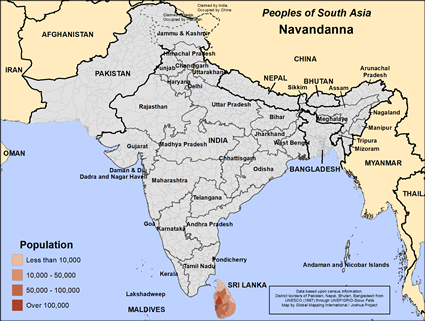
The Navandanna are a traditional caste group in Sri Lanka historically associated with metalwork, blacksmithing, and craft production. Their name is linked to the Sinhala word for smiths, and they have long been recognized as artisans who contributed to temple construction, ritual implements, and household tools.
Historically, their skills were vital to village life, and their work was integrated into the cultural and religious fabric of Sinhala society. Over time, modernization and industrialization have reduced the demand for their traditional crafts, leading many younger Navandanna to seek other forms of employment.
The Navandanna live primarily in Sinhala-majority areas of Sri Lanka. Traditionally, their livelihood centered on blacksmithing, brass work, and wood carving, but today many have diversified into agriculture, wage labor, or small-scale business. Family life is typically extended, with multiple generations living together and sharing responsibilities.
Celebrations often revolve around Buddhist festivals such as Vesak, as well as local harvest and village events. Food is similar to other Sinhalese groups, with rice and curry forming the staple diet, accompanied by lentils, coconut-based dishes, and seasonal vegetables. While their crafts once held high cultural significance, younger generations often view such work as low-status, creating tension between preserving heritage and pursuing modern opportunities.
The Navandannas are predominantly Buddhist, with only a small minority identifying as Christian. Buddhism shapes their worldview, moral values, and community practices, with temple rituals and festivals playing a central role. Religious identity is deeply tied to cultural traditions, and the influence of Buddhism is evident in their art, music, and social life. Christianity has made limited inroads among them, and the gospel presence remains minimal, with little historical connection to Christian missions.
The Navandanna face challenges in preserving their cultural heritage while adapting to modern economic realities. Many families struggle with economic insecurity as traditional crafts lose relevance in a globalized economy. Education and employment opportunities are often limited, particularly in rural areas, leading to migration and social change.
Spiritually, the Navandanna need exposure to the message of Christ in ways that resonate with their cultural identity and values. Socially, they require encouragement to see dignity in their heritage while also embracing new opportunities for sustainable livelihoods.
Pray that the Navandanna will encounter the love of Christ through relationships and witness from nearby believers.
Pray asking God to raise up local Christians who will see themselves as part of the mission force, reaching out with compassion and respect.
Pray for economic stability and opportunities for younger generations, so that families can thrive without abandoning their heritage.
Pray for openness to the gospel, for hearts to be softened, and for communities to experience transformation spiritually.
Finally, pray asking God if He would use you to preach the gospel and make disciples among the Navandanna peoples.
Scripture Prayers for the Navandanna in Sri Lanka.
His Feet International overview of unreached people groups in Sri Lanka
Kalinga Tudor Silva, Caste, Craft and Traditional Knowledge in Sri Lanka
| Profile Source: Joshua Project |


